

The Faithful Homeschool Steward · Module 4: Stewardship in Action
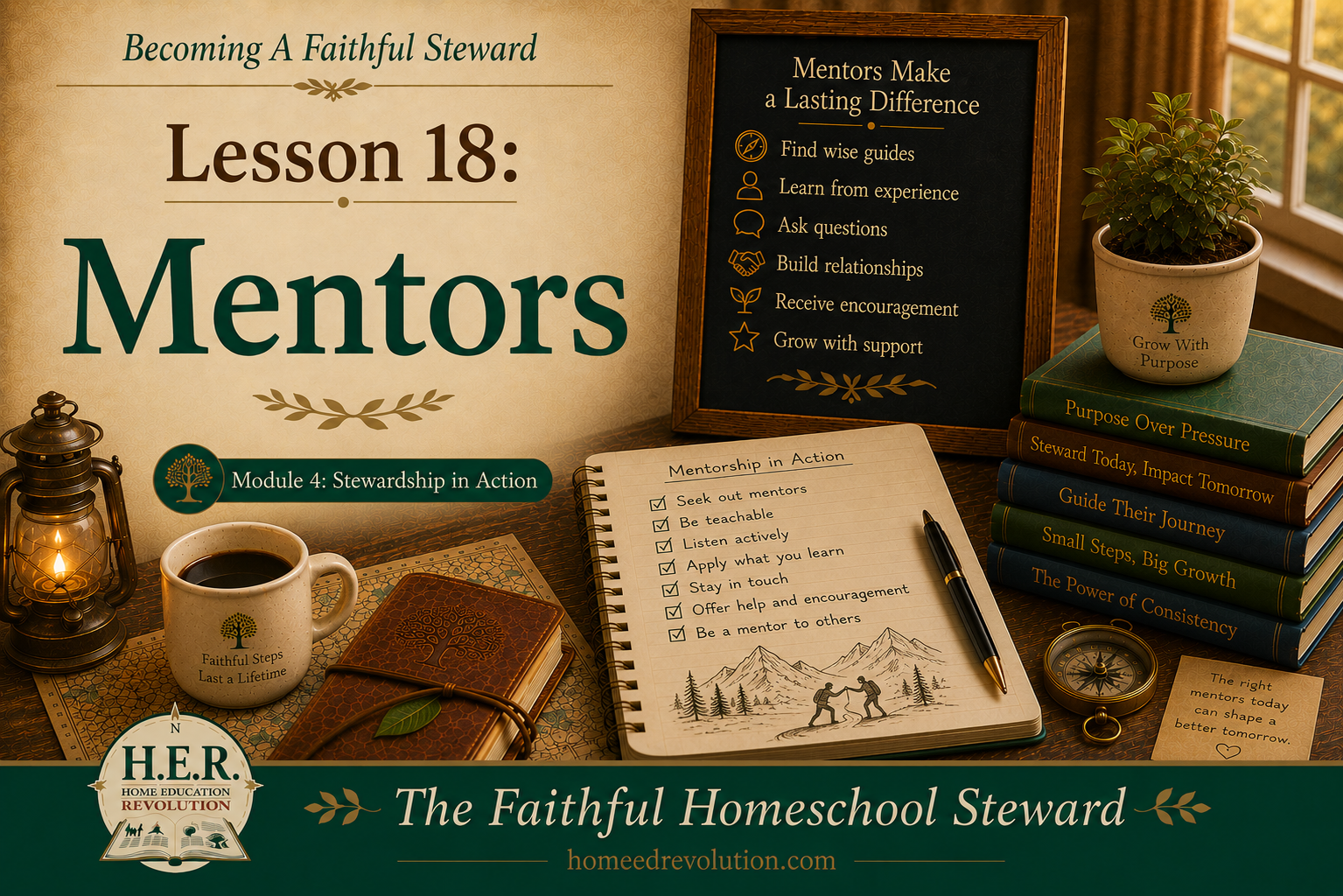
You already know what a real mentor feels like, even if you’ve never used that word for it. This lesson starts with your own experience, not your child’s, because you can’t recognize a good mentor for your child until you’ve named what one actually gave you.
Dana learned to quilt from a woman at her old church, Miss Arlene, who never once taught her in anything that looked like a lesson. She just let Dana sit at the machine next to hers on Thursday afternoons for two years, correcting one thing at a time, never the whole quilt at once, never in front of anyone else. Dana didn’t realize until years later that what Miss Arlene had actually reshaped in her wasn’t her stitching. It was her patience, with fabric and with everything else.
Bringing in a mentor extends a Steward’s reach. It doesn’t replace it.
Miss Arlene was never trying to make Dana into a copy of herself, another quilter turning out the same nine patterns. She was handing over something Dana could eventually take somewhere Miss Arlene never would have gone herself. That’s the same craftsman-and-apprentice shape this course opened with. You are not required to be your child’s only teacher. A Steward notices the gaps in her own reach and goes and finds who can fill them. Bringing someone else in isn’t losing ownership. It’s extending it.
Before you look for anyone for your child, name your own mentor first, even briefly. What did they actually give you. Not information: what changed in how you worked, or thought, or showed up. That’s the thing worth watching for when you go looking for someone for your child.
Run a simple mentor-mapping exercise: list who in your existing circle, family, church, neighborhood, co-op, already has real expertise in the direction your child is leaning toward. Dana didn’t have to look far for Caleb. Her brother-in-law does HVAC repair for a living and has been vaguely aware for a year that his nephew likes taking things apart. One low-stakes conversation, an hour in his shop on a Saturday, not a formal apprenticeship, is the whole first step.
If you’re having trouble naming anyone in your own circle with relevant expertise, describe your child’s direction to an AI assistant and ask what kinds of hobbies, careers, or community roles tend to overlap with it. That widens your search. It doesn’t replace actually knowing the person you eventually ask.
Name what a mentor once gave you, briefly, in your own life.
Then identify one potential mentor for your child from your existing circle, and reach out for one low-stakes conversation, not a commitment.
This becomes the Mentor entry on your child’s Roadmap. With it, all four Module 4 sections, Habit, Experience, Project, Mentor, are in place.
That’s the last new tool this module has for you. Waypoint 4 asks you to build one more habit, this time your own.
Related Reading
When You Don’t Know the Subject
Raising Capable Kids Through Homeschooling
Continue Your Journey
← Back to the Full Table of Contents
Previous: Lesson 17: Family Projects
Next: Waypoint 4: Stewardship in Action, Complete
Join the H.E.R. (Home Education Revolution) Community at www.homeedrevolution.com