

The Faithful Homeschool Steward · Module 4: Stewardship in Action
Objective
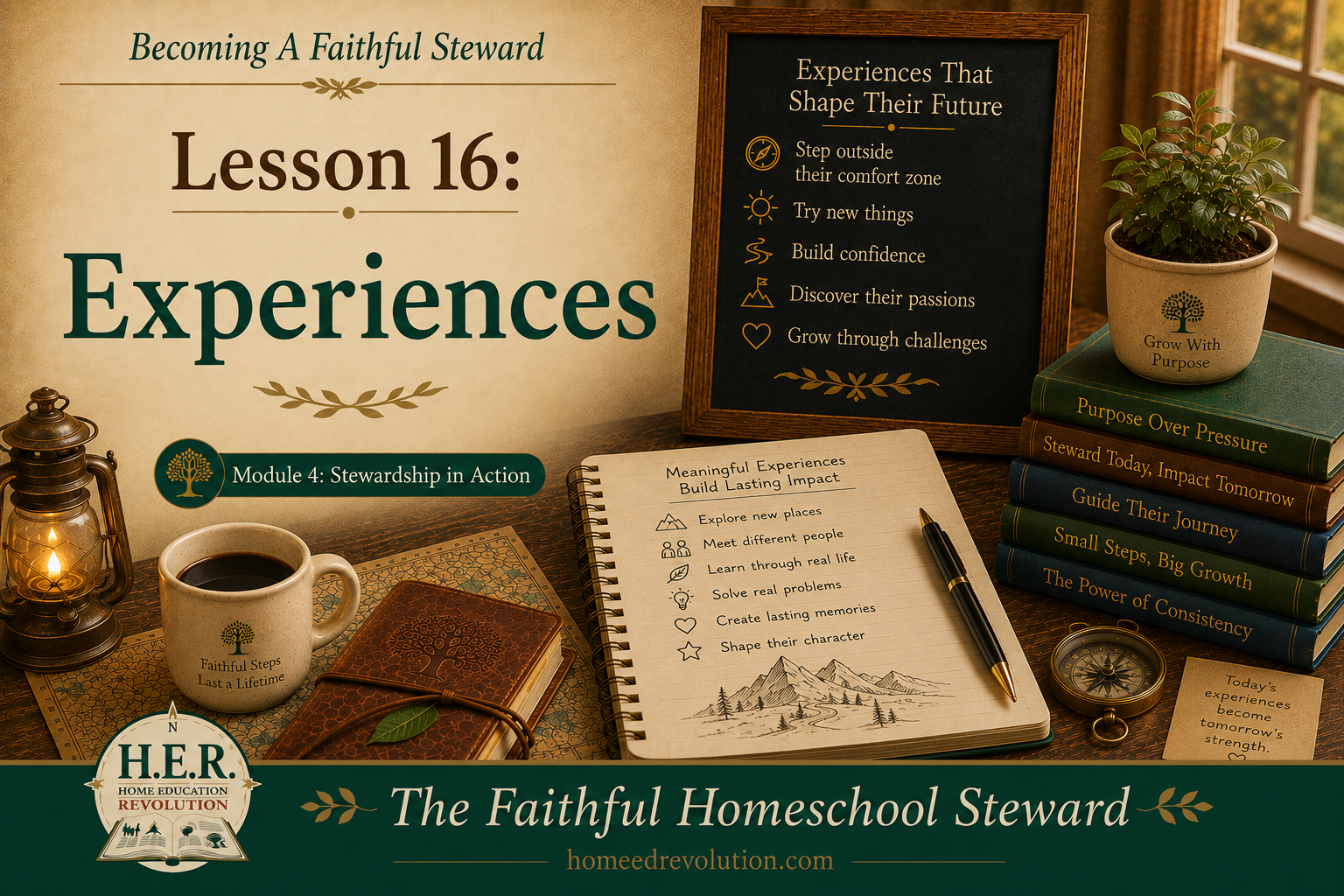
Some development can’t be taught from a chair. It has to be encountered. This lesson isn’t about adding more field trips to your week. It’s about aiming the ones you already have at a real priority instead of picking them at random.
Opening Story
After Lesson 10, Dana looks into it and finds the city runs a free public tour of the recycling sorting facility on Tuesday mornings. She takes Caleb. Twenty minutes into a guide explaining the conveyor system, Caleb is asking questions the guide has clearly never been asked before: why glass gets pulled before plastic, what happens when something gets sorted into the wrong bin, whether a home system could be designed so that mistake couldn’t happen in the first place. Forty-five minutes of real engagement, and nobody assigned a single worksheet to get it.
The Reframe
Some development can’t be taught. It has to be encountered. A Steward’s role is curating the exposure, not just supplying the information.
A book about recycling systems could have given Caleb facts. It couldn’t have given him a guide fumbling for an answer to a question he’d never been asked, or a live conveyor belt to watch fail in real time when something got sorted wrong. That’s not a better fact. It’s a different kind of encounter, and it’s the kind a Steward has to go looking for on purpose.
How This Works
Run a simple experience audit: for this season’s current priority, name one real-world encounter, sized to what your family can actually pull off this season, that would let your child bump into the idea instead of just reading about it.
If real-world, hands-on learning like this is already your family’s natural rhythm, whether that means one field trip or your whole education built around travel, Home Education Revolution has a name and a full resource set for it: Roadschooling, homeschooling built around real-world encounters instead of a fixed classroom. It’s covered in depth in the book The Roadschool Revolution, worth a look if this lesson feels like the way your family already learns best.
The recycling tour wasn’t originally planned as a Roadmap activity. Dana booked it almost on a whim, remembering Caleb’s question from Lesson 10. It turned out to be the clearest experience entry the Roadmap had all season, proof that an experience tied to a real, already-named priority does more than a more elaborate one picked at random.
Want Help?
If you’re not sure what kind of real-world experience would actually connect to your child’s priority, describe the priority to an AI assistant and ask for a few low-cost, local ideas. You still know your family’s actual weekend better than anything else does. It’s just useful for narrowing a search that otherwise starts from nothing.
This Week’s Assignment
Plan one experience tied to a current Roadmap priority.
Building Your Development Roadmap
This becomes the Experience entry on your child’s Roadmap.
Looking Ahead
An experience you curate is powerful. Next, a project your child directs is even more so.
Related Reading
Letting the World Become the Classroom
Continue Your Journey
← Back to the Full Table of Contents
Next: Lesson 17: Family Projects
Join the H.E.R. (Home Education Revolution) Community at www.homeedrevolution.com