Curriculum Getting Started Life Skills Parenting Physical Education Real-World Learning Roadschool Wellbeing

PE on the Road: How to Use the World as Your Gym

I used to panic every time we pulled into a new town and I realized I hadn’t planned PE.

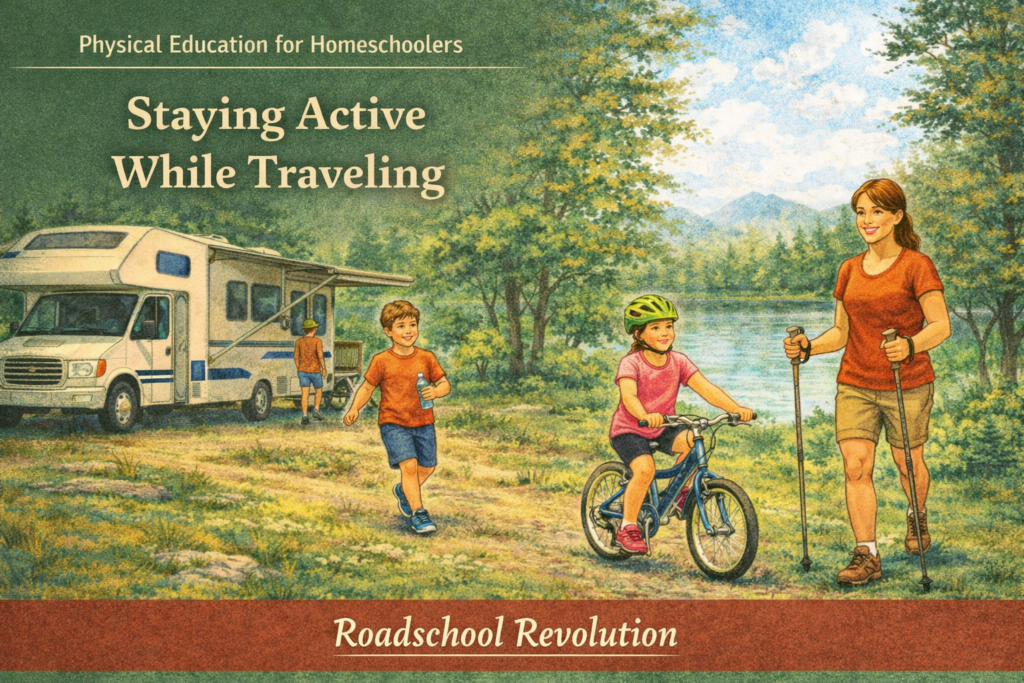
We’d been on the road for about three weeks. Different campground every few nights. New landscapes every few days. The kids were climbing everything in sight, swimming in lakes, hiking trails they’d never seen, carrying their own packs across terrain that would have been ambitious for adults.

And I was stressed about PE.

I had this mental image of what PE was supposed to look like — a plan, a space, a curriculum, a dedicated block of time. And none of that was happening. So I kept logging the hours as ‘outdoor activity’ instead of PE, feeling like I was fudging the records.

It took me an embarrassingly long time to see what was actually happening.

My children were getting some of the most complete physical education available to any homeschool family anywhere. They just weren’t doing it in a format I recognized as legitimate.

PE on the Road: How to Use the World as Your Gym Read Post »
Curriculum Foundational Education Life Skills Parenting Physical Education Wellbeing

Organized Sports: When They Help, When They Hurt, and How to Decide

I signed my child up because I thought I was supposed to. That was the wrong reason.

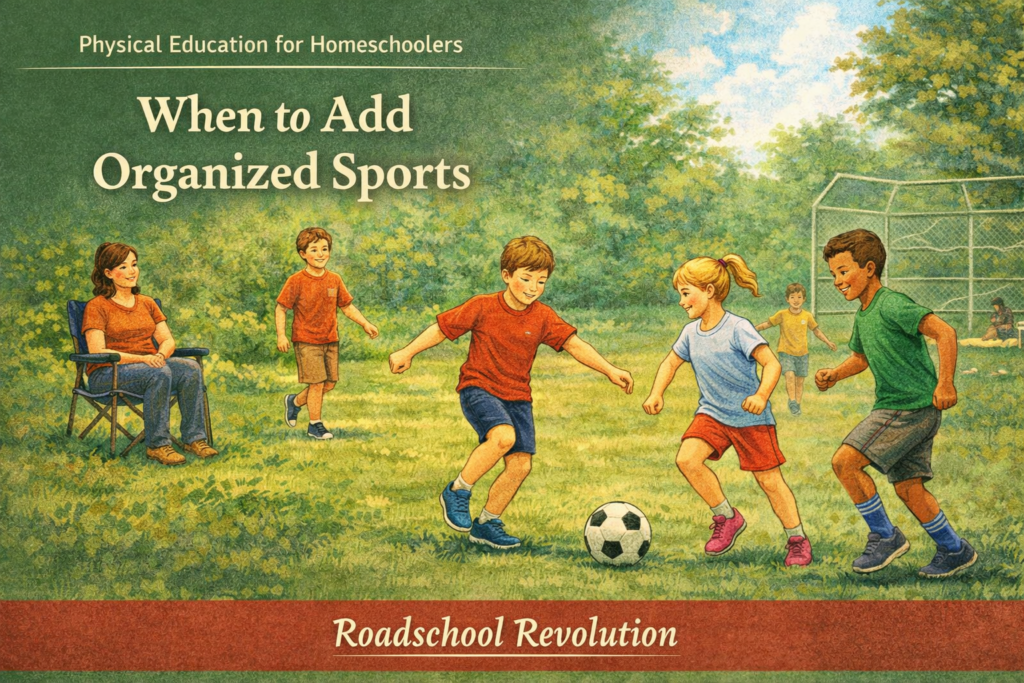
It was fall. Sign-up sheets were going around. Every other family in our circle seemed to be registering for something — soccer, gymnastics, swim team, martial arts. And I remember standing there with the form in my hand thinking: is this just what you do?

So we signed up. And the first season was fine. The second season was fine. And somewhere in the third season, I looked at my child on that sideline and realized that ‘fine’ was about the best word for it. Not growing. Not struggling. Not particularly engaged. Just — there. Going through the motions because we’d signed up for the motions.

That’s not what sports are supposed to be.

But I’ve also seen the other version — the child who found something in a sport that nothing else could give them. The kid who was shy everywhere else and became someone different on a court. The girl who turned an individual sport into a four-year love affair with her own improvement. The boy who learned more about grit and teamwork from two seasons of wrestling than from any other single experience in his childhood.

Organized sports can be one of the most powerful tools in a child’s physical development. Or they can be a very expensive, time-consuming way to check a box. The difference is almost entirely in the fit.

Organized Sports: When They Help, When They Hurt, and How to Decide Read Post »

Scroll to Top