Foundational Education Thinking Skills Waypoint 3 — A Day That Actually Happened Waypoint 5 — Did It Actually Work?

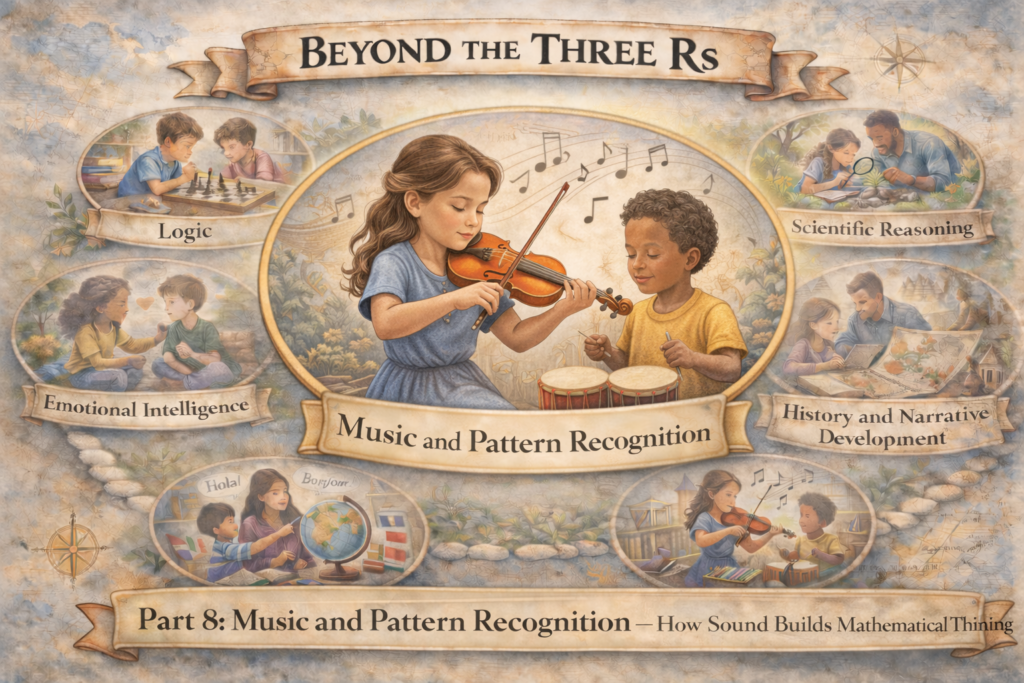
Music and Pattern Recognition: How Sound Builds Mathematical and Linguistic Thinking

Of all the subjects in this series, music is the one most likely to be treated as optional. When the homeschool day gets crowded — when the math lesson runs long or the reading needs more attention or the afternoon disappears faster than expected — music is often the first thing that gets set aside. It feels like enrichment. A nice addition when there’s time. Something to add back in when the fundamentals are solid. This post makes the case that this instinct, however understandable, gets the priority exactly backwards.

Music and Pattern Recognition: How Sound Builds Mathematical and Linguistic Thinking Read Post »
Foundational Education Real-World Learning Thinking Skills Waypoint 3 — A Day That Actually Happened Waypoint 5 — Did It Actually Work?

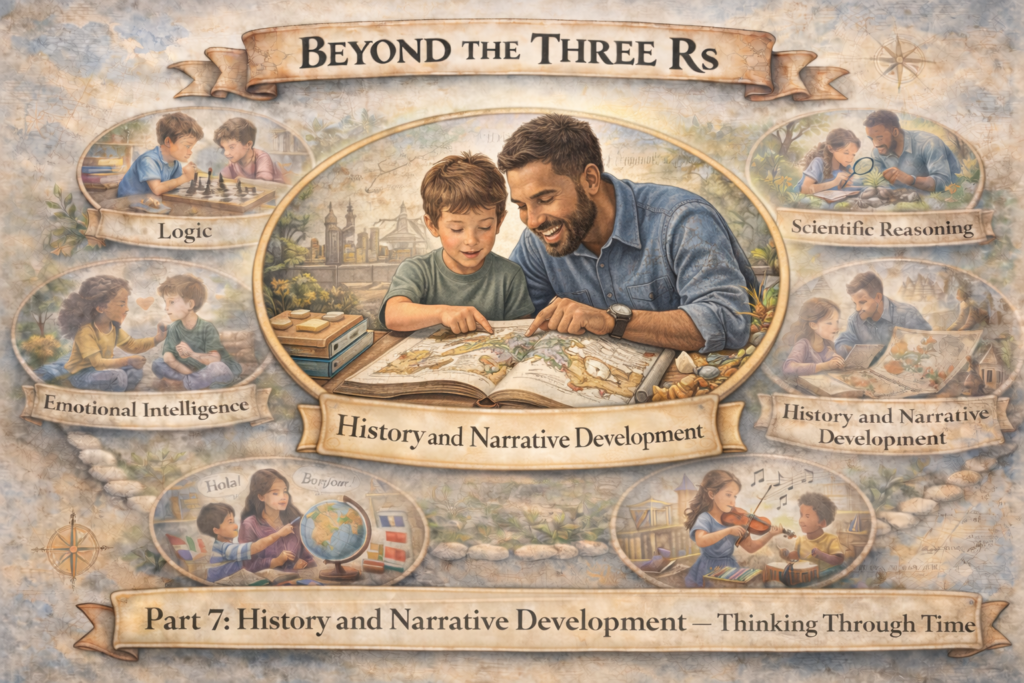
History and Narrative Development: Teaching Children to Think Through Time

Ask most adults what they remember from their history education, and the answer is almost always the same. Dates. Names. A few battles. The year a war ended.
And almost none of it in context — almost none of it as a story in which one thing led to another, in which human beings made decisions under uncertainty with incomplete information, in which the consequences of those decisions unfolded over decades in ways that nobody predicted and that still shape the world today.

History and Narrative Development: Teaching Children to Think Through Time Read Post »

Scroll to Top