Foundational Education

Foundational Education Real-World Learning Thinking Skills Waypoint 3 — A Day That Actually Happened Waypoint 5 — Did It Actually Work?

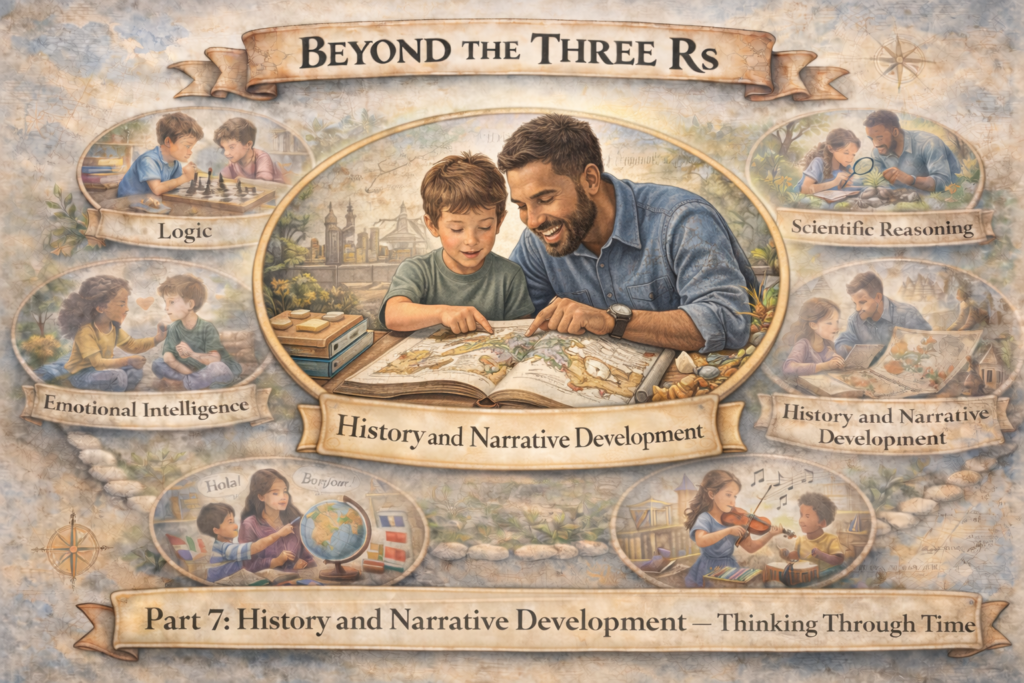
History and Narrative Development: Teaching Children to Think Through Time

Ask most adults what they remember from their history education, and the answer is almost always the same. Dates. Names. A few battles. The year a war ended.
And almost none of it in context — almost none of it as a story in which one thing led to another, in which human beings made decisions under uncertainty with incomplete information, in which the consequences of those decisions unfolded over decades in ways that nobody predicted and that still shape the world today.

History and Narrative Development: Teaching Children to Think Through Time Read Post »
Foundational Education Thinking Skills Waypoint 3 — A Day That Actually Happened Waypoint 5 — Did It Actually Work?

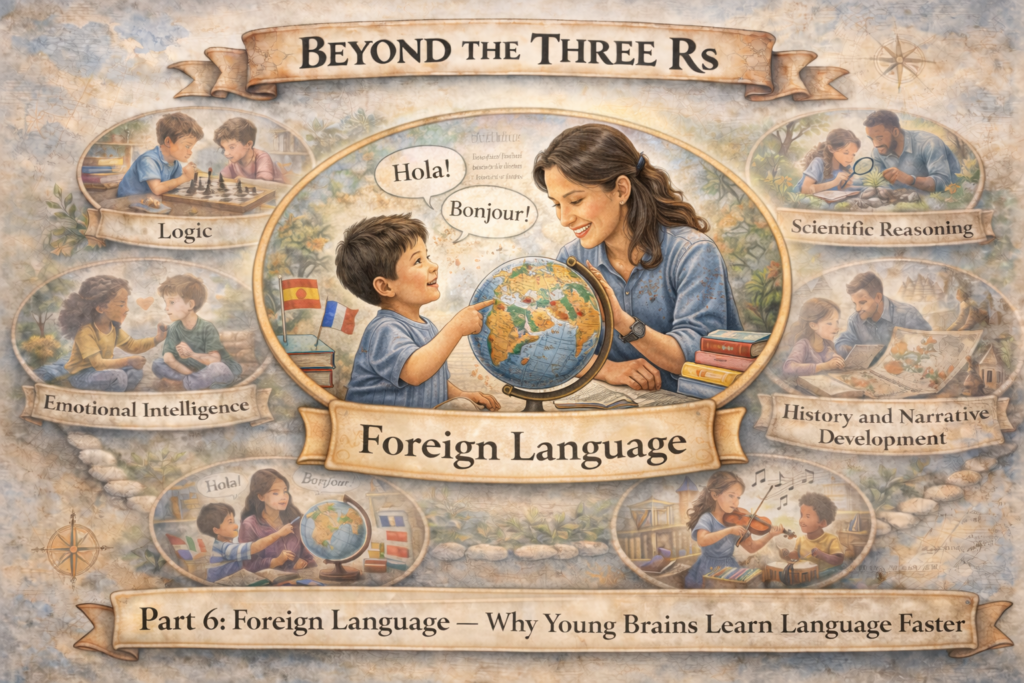
Foreign Language: Why Young Brains Learn Language Faster

At some point in their adult life, most people look back on the years they spent in high school language class and feel a particular kind of quiet regret. They studied Spanish, or French, or German, for two or three or four years. They conjugated verbs. They memorized vocabulary lists. They passed the tests. And then, outside the classroom, they found that they couldn’t actually speak the language — couldn’t follow a native speaker at normal speed, couldn’t find the right word when they needed it, couldn’t hear the language as anything other than a stream of sounds that had to be decoded one word at a time.

Foreign Language: Why Young Brains Learn Language Faster Read Post »

Scroll to Top